
Peptides
Last Updated
Table of contents
Search "peptides for muscle growth" and you get a tidy list of compounds promising steroid-like gains with none of the downside. The reality is messier, and worth understanding before you spend a dollar. Most of these are not approved medicines. They are research chemicals with thin human evidence, and a couple carry real safety problems.
This is an honest, evidence-graded guide to the five muscle-building peptides people actually search for: what each does, what the research shows, what to track if you use one, and whether you can legally get it. The short version is that none is a shortcut, a few are a genuinely bad idea, and the things that actually build muscle are not on the list. We will get to those, and to the legitimate options OneTwenty does offer, too.
Muscle peptides in 2026 · the honest numbers
What actually builds muscle
Before any compound, the honest hierarchy. The overwhelming majority of muscle growth comes from progressive resistance training, enough protein, enough sleep, and enough time. That is not a disclaimer to skip past, it is the part that does ninety-plus percent of the work, and no peptide changes it. The next most reliable lever is correcting a genuine deficiency, most commonly clinically low testosterone, under medical supervision. That is real medicine with real monitoring, covered in our testosterone peptides guide, and it is a different thing entirely from the list below.
The muscle peptides themselves nearly all funnel through one pathway: raise growth hormone, which raises IGF-1, which has a role in muscle protein synthesis and recovery. The mechanism is real. The problem is that the human evidence for these specific compounds building meaningful muscle in healthy, training adults is limited, most are research chemicals rather than approved or compounded therapeutics, and the same IGF-1 signal that grows muscle also raises real safety questions.
Evidence vs legitimacy
Where the muscle peptides actually land
Strength of human muscle-growth evidence plotted against legitimacy and legal access.
Muscle peptides plotted by how strong the human evidence is against how legitimate and accessible they are. Nothing reaches the top. The real driver, training plus protein plus sleep, sits top right for reference and is not a peptide. CJC-1295 is the least unreasonable option and is pending the July 2026 review. The rest are research chemicals, and ACE-031 had its trials halted for safety.
The five muscle peptides, ranked honestly
| Rank | Peptide | Acts on | What it does | Evidence | Status |
|---|---|---|---|---|---|
| 1 | CJC-1295 GHRH analog | GH axis | Recovery, modest body composition | Limited | Pending Jul 2026 |
| 2 | IGF-1 LR3 IGF-1 analog | IGF-1 receptor | Broad anabolic signal | Limited | Research only |
| 3 | PEG-MGF IGF-1 splice variant | Repair signal | Satellite-cell repair theory | Emerging | Research only |
| 4 | GHRP-6 GH secretagogue | Ghrelin / GH | Big appetite boost, some GH | Limited | Research only |
| 5 | ACE-031 Myostatin trap | Myostatin | Removes a brake on muscle size | Emerging | Halted in trials |
Ranking reflects the balance of mechanism, human evidence, safety, and whether the compound is a legitimate product at all. The order is least-bad to worst, not a list of recommendations.
The peptides, one by one
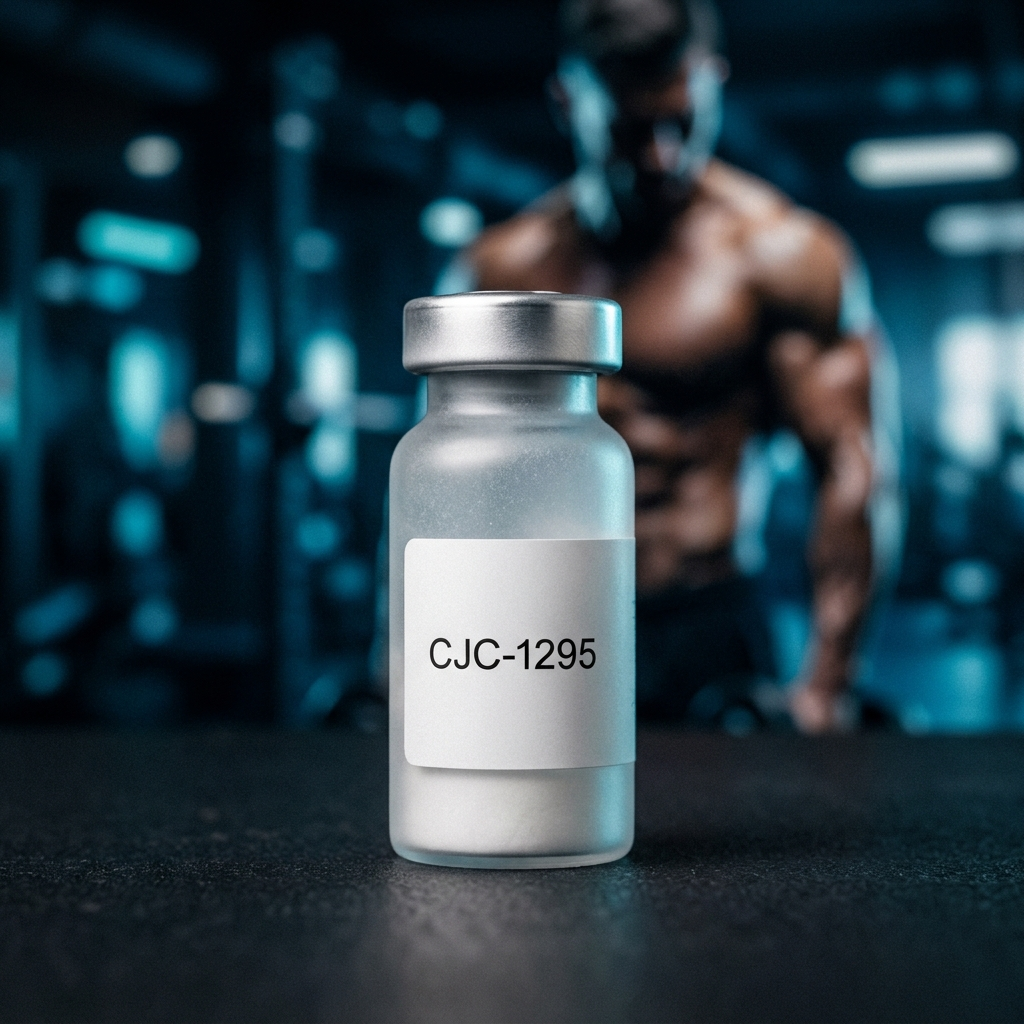
CJC-1295
Pending Jul 2026CJC-1295 is a long-acting analog of growth-hormone-releasing hormone that prompts your pituitary to release more of your own growth hormone, which in turn raises IGF-1. The theory for muscle is better recovery, better sleep, and a modest anabolic nudge. In practice the controlled evidence that it builds meaningful muscle in healthy, training adults is limited, and the realistic effect is on recovery and body composition at the edges rather than dramatic size.
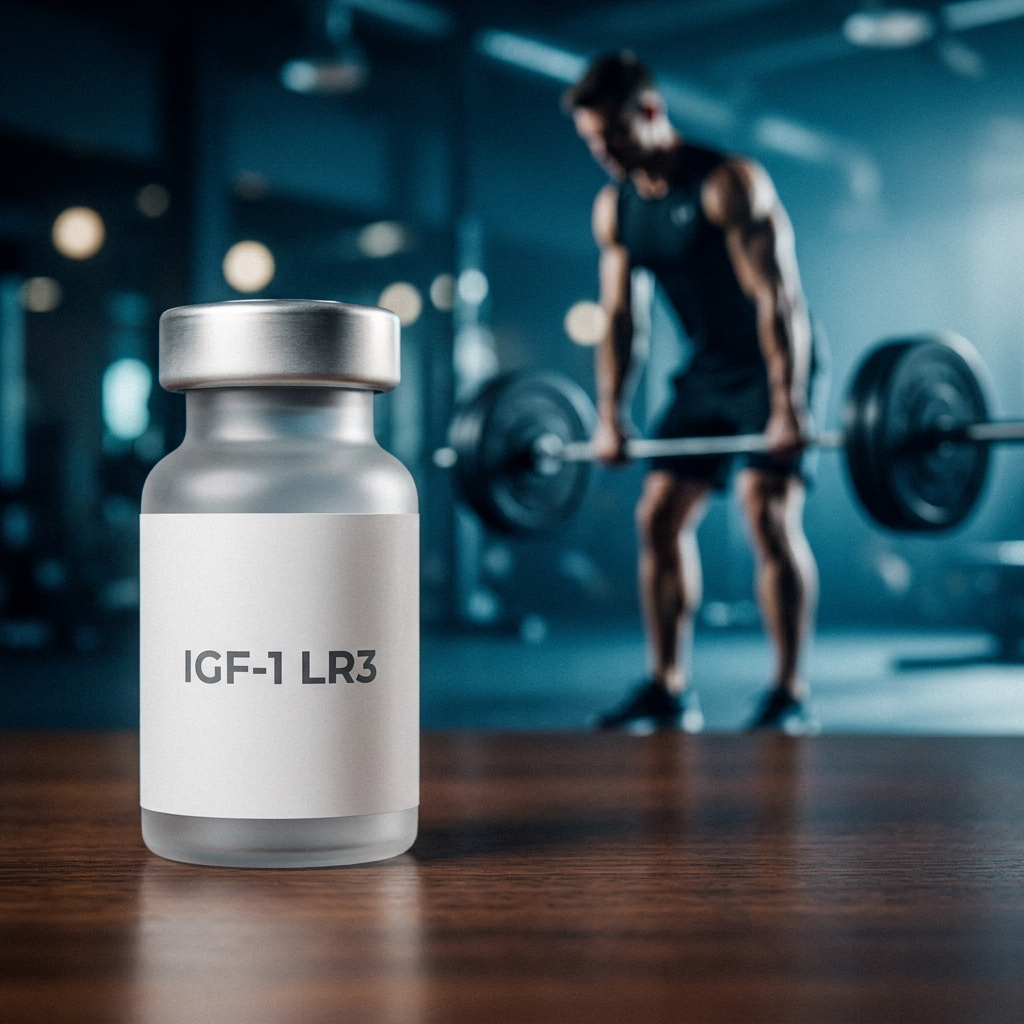
IGF-1 LR3
Research onlyIGF-1 LR3 is a long-acting version of insulin-like growth factor 1, the hormone downstream of growth hormone that binds receptors on essentially every cell to drive growth. That is exactly why it is popular in bodybuilding and exactly why it is risky. The same signal that grows muscle drives cell proliferation broadly, and elevated IGF-1 is associated with increased risk of several cancers. It can also drop blood sugar sharply.
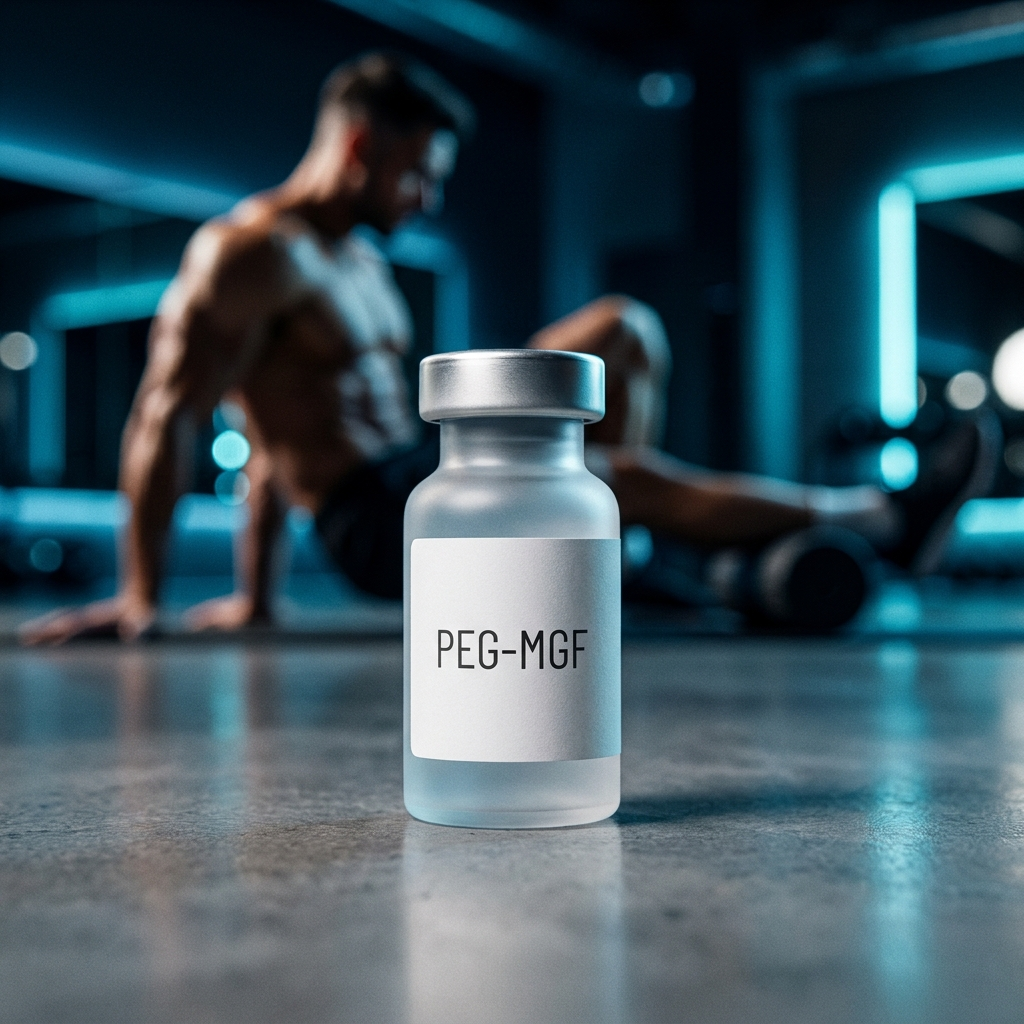
PEG-MGF
Research onlyPEG-MGF is a pegylated version of mechano-growth factor, a splice variant of IGF-1 released in muscle after mechanical stress that is thought to help activate satellite cells and aid repair. The recovery logic is plausible, but the human evidence is preclinical and thin, and it only has a rationale at all if you are already training hard enough to create the damage it is meant to help repair.
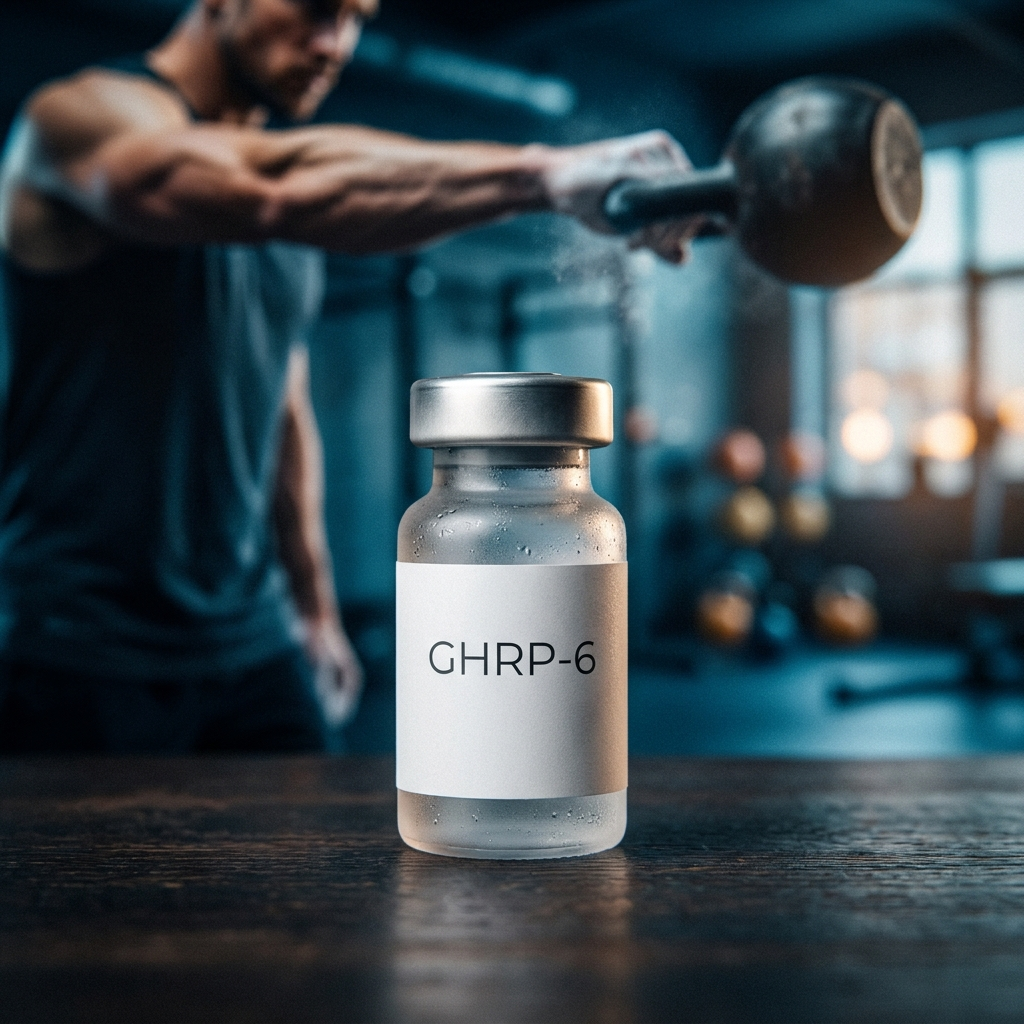
GHRP-6
Research onlyGHRP-6 is a growth-hormone-releasing peptide that works through the ghrelin receptor, so alongside a growth hormone bump it produces a strong increase in appetite. For someone struggling to eat enough in a bulk, that appetite effect is the real draw, but it is an eating aid more than a muscle-building mechanism, and the direct evidence for added muscle is limited.
ACE-031
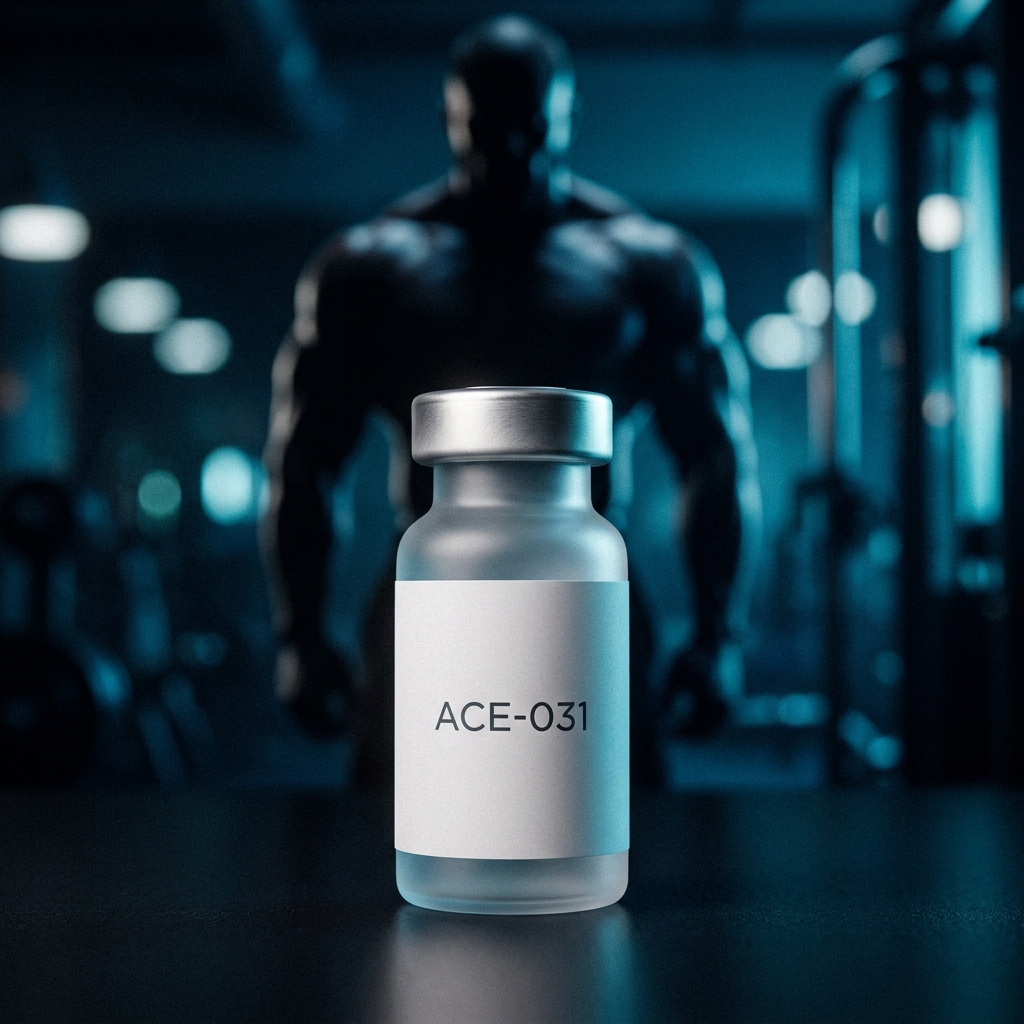
Halted in trialsACE-031 is a myostatin trap, a fusion protein designed to soak up myostatin, the body's brake on muscle growth, which can increase muscle size. The mechanism is genuinely powerful, but its clinical development was stopped over safety signals including nosebleeds, gum bleeding, and small-vessel problems, traced to it also blocking the BMP-9 and BMP-10 proteins that keep blood vessels healthy. Reports suggest it adds size more than usable strength. It now exists mainly as a gray-market research chemical.
How they are supposed to work
Almost all of these run through the same chain. Raising growth hormone, whether with a GHRH analog like CJC-1295 or a secretagogue like GHRP-6, raises IGF-1, and IGF-1 supports muscle protein synthesis and recovery through well-mapped signaling pathways. IGF-1 analogs like IGF-1 LR3 and PEG-MGF skip a step and act on that receptor directly. ACE-031 takes a different route, removing myostatin so the body's natural limit on muscle size loosens.
The pathways are real, which is why the marketing sounds convincing. What the marketing leaves out is that a real mechanism in a petri dish or a clinical population does not equal a safe, proven result for a healthy adult chasing gym gains. The evidence gap, the safety questions, and the legal status are where these fall down, not the biochemistry.
Are muscle peptides worth it?
The honest verdict
For almost everyone, no, and here is the better play
Measure before you experiment
If you are training and eating well and still not building muscle, the high-yield move is not a research chemical. It is finding out why. Low testosterone, a thyroid problem, low vitamin D, poor sleep quality, and chronic under-recovery all blunt muscle growth, and all of them show up in data you can actually measure. Correcting a genuine deficiency under a clinician does more, and far more safely, than anything on this list.
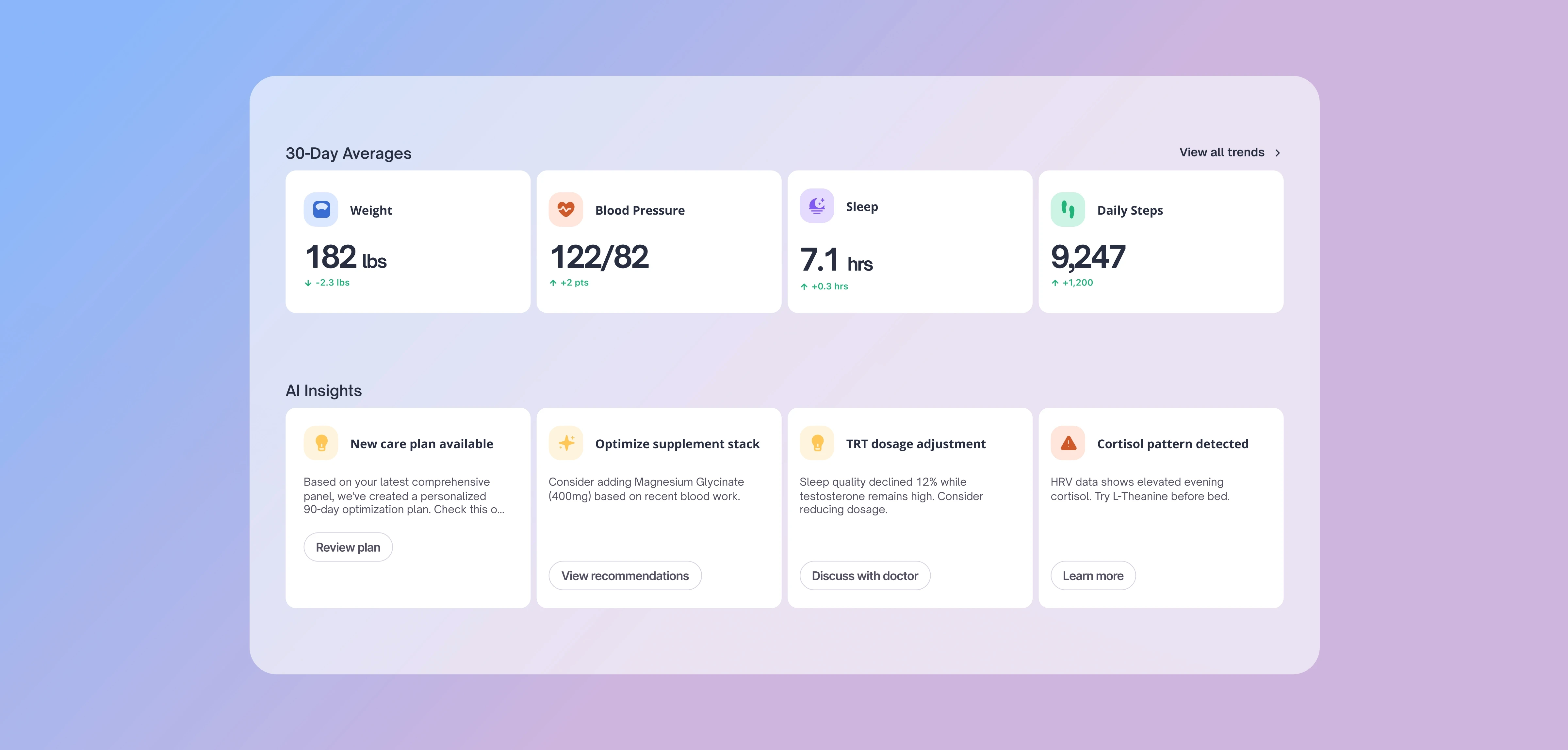
That is what OneTwenty is built to do. Quarterly comprehensive panels, continuous data from your connected devices, and an AI coaching layer that reads it together, with treatment, where warranted, handled by independent licensed providers and tracked against your numbers. Where a legitimate option fits, it is a real one: sermorelin for the growth-hormone-axis route the research peptides only imitate, and enclomiphene to raise your own testosterone when low T is the bottleneck. For the full baseline, start with our longevity blood test guide.
Find what is actually holding your progress back.
OneTwenty pairs comprehensive testing and quarterly panels with connected-device data and clinician-supervised care, so the things that quietly limit muscle growth, low testosterone, thyroid issues, poor recovery, get measured and addressed instead of guessed at. The legal peptide formulary and bioidentical HRT launch in early July 2026, with the rest added as the FDA process clears them.
Get started with OneTwenty →Quarterly panels · connected-device data · clinician-supervised · $499/yr
Muscle peptides FAQ
Do peptides actually build muscle?
At best modestly, and mostly by supporting growth hormone, IGF-1, and recovery rather than directly adding size. The human evidence for these specific compounds is limited, and none replaces training, protein, and sleep. Most of the visible results online come from people who also train and eat seriously.
What is the best peptide for muscle growth?
If forced to rank, CJC-1295 is the least unreasonable because it works with your own growth-hormone axis and is at least under FDA review. But "best" is misleading here: none is proven or approved for muscle in healthy adults. The legitimate version of that mechanism is sermorelin under supervision.
Are muscle-growth peptides safe?
This is not a low-risk category. Several are research chemicals not approved for human use and of unknown purity, IGF-1 analogs raise a real cancer-promotion concern, and ACE-031 had its trials halted over bleeding and vascular safety signals. Treat anything here as experimental, not routine.
Are these peptides legal right now?
The compounded growth-hormone peptides like CJC-1295 are pending the FDA advisory review on July 23 to 24, 2026, so they are not legally compounded until guidance publishes. The others are sold as research chemicals, not legitimate clinical products. See our guide to getting legal peptides online.
Are peptides better than steroids or SARMs?
"Milder than steroids" is a marketing frame, not a safety rating. Anabolic steroids are controlled substances with serious risks, SARMs are unapproved with their own problems, and these peptides are largely unproven. None is a safe shortcut. The durable path is training, nutrition, sleep, and correcting genuine deficiencies under care.
What actually builds muscle?
Progressive resistance training, adequate protein, quality sleep, consistency, and time do the overwhelming majority of it. For people with a genuine deficiency, correcting it under a clinician, such as treating clinically low testosterone, can help. That is the high-yield, lower-risk path.
Sources & references
- ACE-031 (ACVR2B-Fc) randomized trial in Duchenne muscular dystrophy, halted for nosebleed, gum-bleeding, and telangiectasia safety signals. pubmed.ncbi.nlm.nih.gov
- Meta-analysis of individual participant data: circulating IGF-1 and prostate cancer risk. pmc.ncbi.nlm.nih.gov
- Circulating IGF-1 signaling and colorectal carcinogenesis, systematic review and meta-analysis, BMC Cancer (2025). link.springer.com
- FDA Pharmacy Compounding Advisory Committee meeting, July 23 to 24, 2026, reviewing compounded peptides (docket FDA-2025-N-6895). fda.gov
- Mechanism background on GHRH analogs, GH secretagogues, IGF-1 signaling, and myostatin inhibition, peer-reviewed endocrinology and sports-medicine literature.
OneTwenty is a health technology company, not a medical provider, pharmacy, or laboratory. This article is educational and is not medical advice. Several compounds described are research chemicals not approved for human use and may be illegal to sell or possess for that purpose in your region. Talk to a qualified clinician before starting any peptide, hormone, or performance compound.


Not your average
Checkup.
Every life stage brings new biological demands. Tracking the right metrics at the right time helps you adapt, optimize performance, and extend both lifespan and healthspan.
Your Annual Physical
Manual Data Processing
Guesswork Trend Detection
Once-a-year physical
Reactive, tested when sick
No data between visits
Once a year testing
Delayed Results
One-size dosing, set and forget
Real-Time Trend Insights
Daily smart-device data
Automated Data Sync
Quarterly Biomarker Tests
Optimal, personalized targets
Plain-language AI insights
Medications titrated to your data
Built to extend healthspan

Frequently Asked Questions
Clarity before
you commit
Answers on setup, scale, and support to remove blockers.